

Description
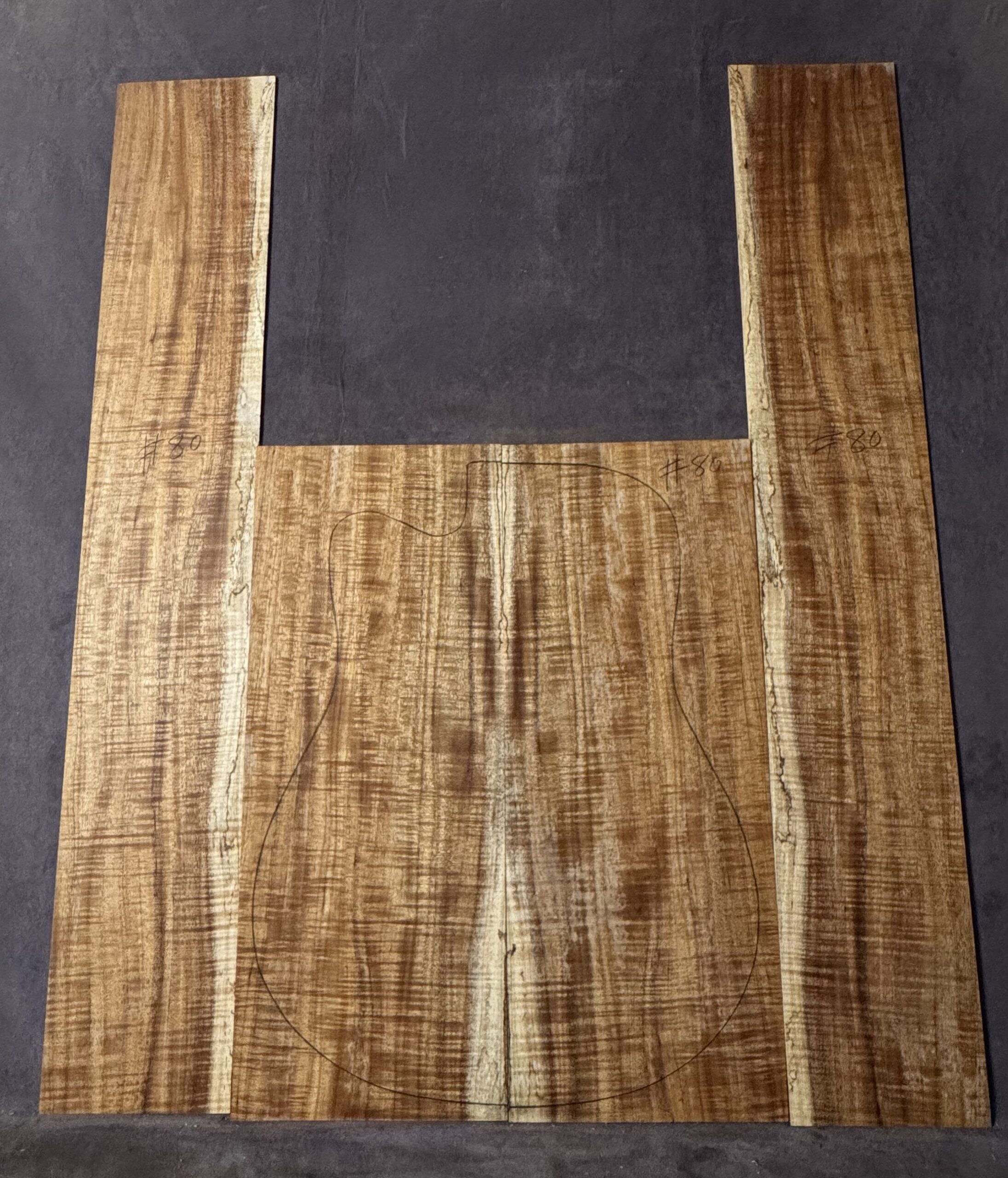
Blackwood Back and Sides – quarter sawn, book matched pair with stunning fiddleback markings, a lovely sap line up the middle finished by very pretty spalting.
Dry and Ready to Use
David from Australian Guitar Timbers mills all his own logs. He air-dries the timber in strips for at least two years before cutting it into blocks. He then kiln-dries the timber in a solar or electric kiln until it reaches 8–10% moisture content.
David sources most of his logs locally in Queensland, with the exception of Tasmanian timbers. Instead of letting these valuable logs go to waste as woodchips, Australian Guitar Timbers rescues and repurposes them.
Sustainability is at the heart of what we do. We love giving this beautiful Australian timber a second life as part of a much-loved musical instrument.
Template is a guide only.
Blackwood is a type of timber that guitar makers and luthiers highly value. It is a dense and heavy hardwood that comes from the Acacia melanoxylon tree, which is native to Australia. It has a striking appearance, with a range of colours that can include dark browns, purples, and blacks, often with unique and highly desirable figuring or figuring patterns. The texture of Blackwood can be fine and uniform, with a straight or slightly wavy grain.
Guitar makers and luthiers highly regard Blackwood for a number of reasons. Firstly, it is known for its tonal properties. It produces a bright, clear sound with good sustain, and has been described as having a balanced tone that is somewhere between mahogany and rosewood. Secondly, it is a durable and stable timber that can withstand the stresses and strains of guitar making, which is important for producing high-quality instruments. Finally, it’s relatively easy to work with, making it a popular choice for luthiers who want a timber that is easy to shape and finish.
Overall, the combination of unique colours, excellent tonal properties, stability, and ease of use makes blackwood a highly sought-after timber for guitar makers and luthiers. It is often used for backs and sides, soundboards, as well as for other instrument parts such as bridges, fingerboards, and headstock veneers.
WHY IS BLACKWOOD HIGHLY VALUED BY GUITAR MAKERS?
- Tonal Properties: Blackwood has a unique tonal quality that produces a bright and clear sound with good sustain. Its balanced tone is somewhere between
mahogany and rosewood, and it is often preferred for its pronounced mid-range frequencies. - Stability: Blackwood is a dense and heavy hardwood that is less prone to warping or bending compared to other tonewoods. This makes it an ideal choice for guitar backs and sides, which must withstand the tension of the strings without losing their shape over time.
- Durability: Blackwood is also a durable timber that can withstand the stresses and strains of guitar making. Its hardness and density make it resistant to dents, scratches, and other damage, ensuring that a guitar made from blackwood will last for many years.
- Ease of Use: Blackwood is relatively easy to work with, making it a popular choice for luthiers who want a timber that is easy to shape and finish. Its fine and uniform texture and straight or slightly wavy grain make it a pleasure to work with.


